

Quick Answer: Patagonia Honeymoon Planning
- Best time to go: November through March (Southern Hemisphere summer) for the best weather and trail access.
- Top destination: Torres del Paine National Park, Chilean Patagonia, home to the W Trek and iconic granite towers.
- Best add-ons: Buenos Aires (2–3 nights) and Santiago (1–2 nights) bookend the trek perfectly.
- Registry strategy: Fund experiences, not things. Guided treks, lodging, dinners, and airfare contributions make ideal Honeyfund registry items.
- Budget range: Expect $4,000–$8,000+ per couple for flights, lodging, and guided experiences combined.
- What makes it honeymoon-worthy: Complete digital disconnection, once-in-a-lifetime scenery, and experiences that bond couples in ways no beach resort can.
Patagonia honeymoons are one of the fastest-growing alternatives to traditional beach destinations for adventurous couples, and a Honeyfund honeymoon registry makes it financially possible. Here’s everything you need to plan yours.
Julia and Justin, a Massachusetts couple who got engaged on a backpacking trip in the Adirondacks and eloped at sunrise on a mountaintop, used their Honeyfund registry to fund a full Patagonia itinerary covering Torres del Paine, Buenos Aires, and Santiago. Their story and registry strategy is the blueprint for this guide.
Why Is Patagonia One of the Best Honeymoon Destinations for Adventurous Couples?
Patagonia is one of the world’s most dramatic landscapes, spanning the southern tips of Argentina and Chile. For couples who prioritize experiences over things, it delivers something no traditional honeymoon destination can: complete immersion, digital disconnection, and memories built through shared challenge rather than poolside relaxation.
Honeyfund’s 2026 Honeymoon Destinations and Wedding Trends Report identifies “Bucket-List Travel” as one of the top trends shaping honeymoon decisions this year, defined as once-in-a-lifetime trips couples pursue after years of delayed adventures. Patagonia is the archetype of that category. The same report finds that 52% of couples cite “travel and honeymoon focus” as their number one reason for choosing a cash registry over a traditional gift list, a clear signal that experience-first travel is now the mainstream choice for newlyweds.
Julia and Justin captured the appeal directly: “We could not think of a better place than the rugged, wild nature of Patagonia. Our friends and family know that we are adventurers. We value experiences over things.”
The region covers three main destinations most couples combine into a single 10–14 day itinerary:
- Torres del Paine National Park (Chile): the centerpiece, home to the W Trek and iconic granite towers
- Buenos Aires (Argentina): a world-class food and culture city, ideal as a pre- or post-trek base
- Santiago (Chile): a modern Andean city with excellent wine, food, and day-trip access to the mountains
What Is the W Trek, and Is It Right for Your Honeymoon?
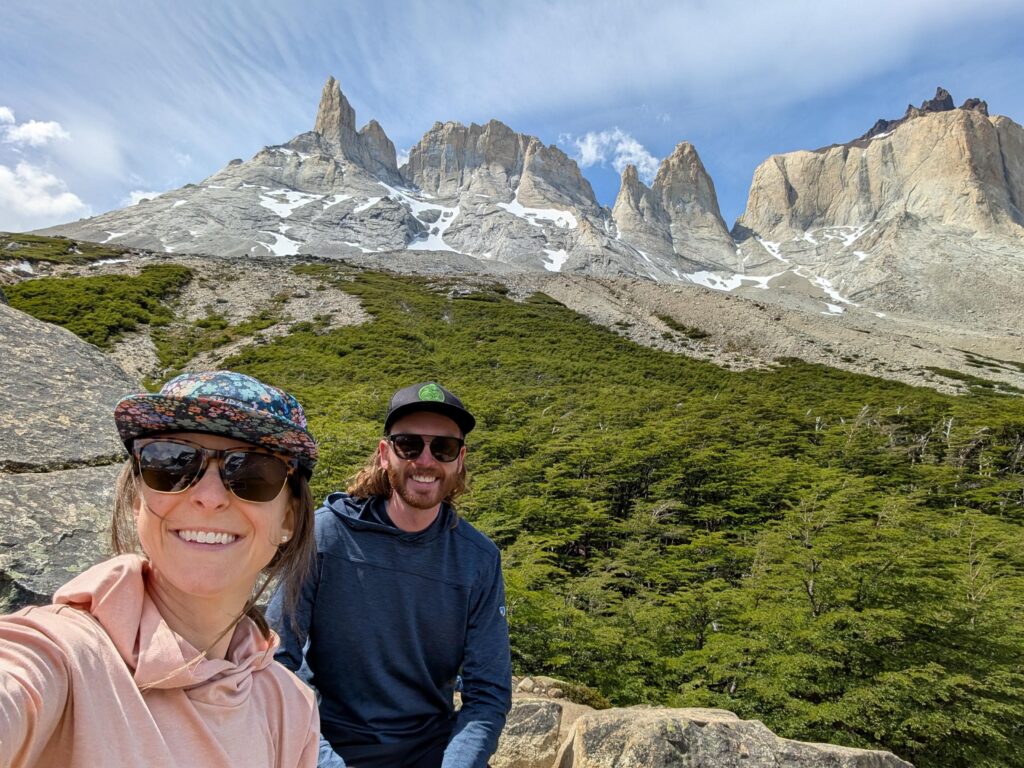
The W Trek is a 4–5 day trekking route through Torres del Paine National Park that traces a W-shape across the park’s most iconic terrain: glaciers, turquoise lakes, and the granite towers themselves. It’s the defining experience of a Patagonia honeymoon and the most popular multi-day route in South America, drawing over 250,000 visitors to Torres del Paine annually, according to Chile’s CONAF national parks authority (2024).
It’s right for you if:
- You’re comfortable hiking 10–15 miles per day with a loaded pack
- You want 4+ days of genuine digital disconnection as newlyweds
- You value a shared physical challenge as a relationship foundation
Consider alternatives if:
- You want a gentler introduction: opt for guided day hikes from a lodge instead
- You want to go deeper: the full O Circuit (8–10 days) loops the entire massif with more remote, less-trafficked terrain
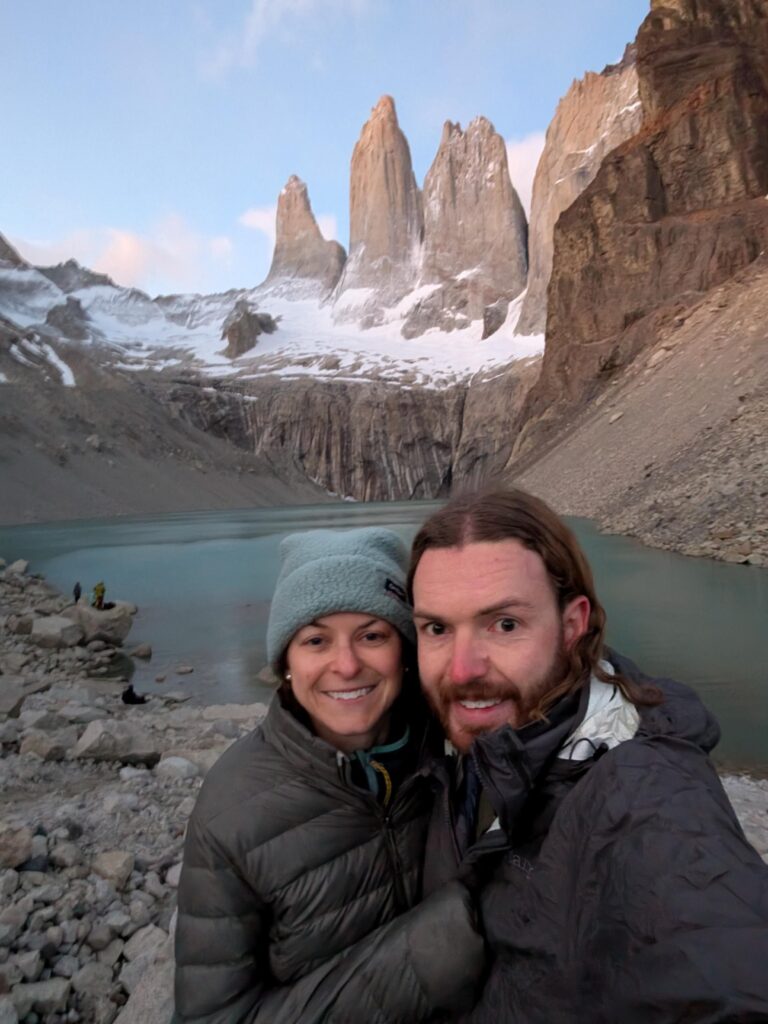
Julia and Justin’s standout memory from the W Trek illustrates exactly what makes it honeymoon-worthy: on their last night, they woke at 3am, hiked in pitch-black drizzle to Mirador Base Torres, waited through clouds in freezing cold, and watched the towers glow pink and orange at sunrise for just a few minutes before the clouds rolled back in.
“We really truly felt so lucky to have been there in that moment for just a little glimpse of what we traveled literally across the world for,” Julia said.
That kind of moment cannot be purchased, but the conditions for it can be planned and funded.
Which Patagonia Lodging Option Is Best for a Honeymoon?
Lodging inside Torres del Paine ranges from backcountry camping to full-service luxury lodges. The right choice depends on your budget, comfort level, and how you want to allocate your Honeyfund registry.
| Lodging Type | Best For | Approximate Cost | Registry-Friendly? |
|---|---|---|---|
| EcoCamp Patagonia (dome) | Couples wanting sustainability + privacy | $500–$800/night | Yes, high-value registry item |
| explora Patagonia | Full luxury, all-inclusive guided experience | $900–$1,200/night | Yes, premium splurge item |
| Refugios (trail huts) | Budget-conscious adventurers | $80–$200/person/night | Yes, affordable per-night gifts |
| Backcountry camping | Experienced campers, lowest cost | $30–$60/person/night | Yes, fund as gear or permit |
| Puerto Natales guesthouse | Pre/post-trek base before entering the park | $80–$150/night | Yes, practical transit night |
EcoCamp Patagonia is the top pick for most honeymoon couples. Each private dome has floor-to-ceiling views of the park, sustainable design, and full-service dining. Booking opens 12–18 months in advance for peak season (November–March).
explora Patagonia is the classic luxury choice: all-inclusive rates cover guided excursions, spa access, and stunning lakeside views. It suits couples who want a curated, zero-logistics experience.
Refugios are the most authentic option and the most budget-accessible. Think bunk beds and shared bathrooms with extraordinary mountain views: the classic W Trek experience. Book at least 6 months ahead; they fill completely for peak season.
What Experiences Should Go on a Patagonia Honeymoon Registry?
A Honeyfund honeymoon registry works especially well for Patagonia because nearly every cost is experiential rather than material. According to Honeyfund internal data, couples who itemize experiences on their registry receive an average of 30% more in contributions than those who list lump-sum travel funds, because guests feel connected to a specific moment rather than an abstract dollar amount.
Here is a full registry item list with suggested contribution amounts:
| Registry Item | Destination | Suggested Amount |
|---|---|---|
| Airfare fund | All | $500 |
| Torres del Paine park entrance | Chile | $35/person |
| W Trek guided tour (per person) | Chile | $400 |
| Sunrise hike to Mirador Base Torres (guided) | Chile | $150/person |
| EcoCamp dome night | Chile | $600 |
| Refugio night on the W Trek | Chile | $120 |
| Gear rental package | Chile | $150 |
| Full O Circuit expedition (per person) | Chile | $900 |
| Buenos Aires steakhouse dinner for two | Argentina | $120 |
| Buenos Aires tango dinner show | Argentina | $180 |
| Private Buenos Aires food tour | Argentina | $150/person |
| Santiago food and wine tour | Chile | $100/person |
| Andes day trip from Santiago (Cajón del Maipo) | Chile | $100/couple |
| “Adventure fund” open contribution | All | Any amount |
Julia and Justin found that itemizing experiences transformed how their guests engaged with the registry. “All of our friends and family that contributed really felt like they were a part of the experience. They kind of knew little bits and pieces of what we would be getting into, and felt like they were a part of the experience with us from afar.”
How Do You Get to Patagonia for a Honeymoon?
Most couples fly into Buenos Aires Ezeiza International Airport (EZE), then connect to Punta Arenas (PUQ) or Puerto Natales in Chilean Patagonia. From Puerto Natales, Torres del Paine is approximately a 1.5-hour bus or private transfer.
Round-trip airfare from major US cities to Buenos Aires ranges from $900–$1,400 depending on departure city and season, according to Google Flights data (2026). Domestic connections to Punta Arenas add $200–$400 per person.
Before you book, use The Ultimate Honeymoon Planning Timeline to map out your full lead time — Patagonia requires earlier booking than most destinations.
Recommended routing:
- Fly into Buenos Aires EZE and spend 1–2 nights to recover from travel
- Fly Buenos Aires → Punta Arenas or Puerto Natales
- Transfer to Torres del Paine for the trek (4–8 days)
- Return to Puerto Natales, then fly to Santiago
- Spend 1–2 nights in Santiago before flying home
When Is the Best Time to Visit Patagonia for a Honeymoon?
Patagonia’s weather is notoriously unpredictable, but season selection significantly affects trail conditions, lodge availability, and overall experience. For a broader look at how seasons affect romantic travel worldwide, see Honeyfund’s guide to Best Weddingmoon Seasons Around the World in 2026.
| Season | Months | Conditions | Best For |
|---|---|---|---|
| Peak summer | November – March | Best weather, longest days, most wildflowers | First-time visitors, couples wanting stability |
| Shoulder season | October, April | Fewer crowds, lower prices, dramatic light | Couples wanting solitude and value |
| Winter | June – August | Many trails and refugios closed | Snow trekking specialists only |
Shoulder season, particularly April, is increasingly the preferred choice for couples who want the scenery without the crowds. Prices drop 20–30% compared to peak December–January rates, and the golden autumn light on the towers is arguably more photogenic than summer.
How Does Honeyfund Make an Adventure Honeymoon Possible?
A Honeyfund registry removes the single biggest barrier to an ambitious honeymoon: cost. By allowing guests to contribute to specific experiences like a guided trek, a lodge night, or a celebratory dinner, couples can fund trips they would otherwise have to compromise on or skip entirely.
“Honeyfund made it possible for us to go on a truly once-in-a-lifetime trip and make it everything we could have ever hoped for and more,” Julia said. “We would have never otherwise been able to do it.”
For couples who already live together and have no need for traditional registry items, a honeymoon fund is the most natural ask. Honeyfund’s own survey data finds that 49% of couples say “we just want money but don’t know how to ask,” and 33% of couples budget their honeymoon at 50% or more of their total wedding cost, yet fewer than half set up a dedicated honeymoon registry to make that ask easy.
“People will always remind you that your wedding is supposed to be about you,” Julia added. “I think that needs to hold true when it comes to gifts as well.”
Sara Margulis, Co-Founder and CEO of Honeyfund, has noted that the shift toward experience-first registries reflects a broader cultural change in how couples define a meaningful start to married life: “The honeymoon is the first chapter of your marriage. It sets the tone for how you’ll invest in your relationship for years to come. Funding it through your registry means your closest people get to be part of that chapter too.”
Research backs this up: Honeyfund’s National Honeymoon Day study found that couples who honeymooned and continued to prioritize travel together reported higher marital satisfaction, even 10+ years into their marriage.
Frequently Asked Questions
How much does a Patagonia honeymoon cost? A Patagonia honeymoon for two typically costs between $4,000 and $10,000 depending on lodging choice, trekking style, and length of stay. Flights from the US run $900–$1,400 per person round-trip. A W Trek with refugio lodging costs roughly $600–$1,200 per person all-in. Upgrading to EcoCamp or explora Patagonia raises costs significantly but can be offset by a Honeyfund registry.
Is Patagonia safe for honeymooners? Yes. Chilean Patagonia, including Torres del Paine, is considered very safe for international travelers. The main risks are weather-related: sudden wind, cold, and rain are common even in summer. Proper gear, trail permits, and staying on marked routes are standard precautions. Buenos Aires and Santiago are major international cities with well-developed tourism infrastructure.
Do you need to be an experienced hiker to do the W Trek? The W Trek is achievable for fit couples with hiking experience, but it requires 4–5 consecutive days of 10–15 miles per day with elevation gain and loaded packs. If you’re not regular hikers, a lodge-based itinerary with day hikes is a better fit and you’ll see the same scenery with far less physical demand.
How far in advance should you book a Patagonia honeymoon? Book 12–18 months in advance for peak season (November–March). EcoCamp and explora Patagonia sell out well ahead of the season. W Trek refugios open reservations in July for the following summer season. Shoulder season (October, April) offers more flexibility with 6–9 months’ notice typically sufficient.
Can you do Patagonia without a guided tour? Yes, self-guided trekking is common and well-supported. Torres del Paine has marked trails, staffed refugios, and a clear permit system managed by CONAF. However, for a honeymoon, guided options add meaningful value: a local guide handles logistics, provides interpretation, and ensures safety in unpredictable conditions. Many couples choose a hybrid approach of guided day hikes plus self-guided overnights.
What language is spoken in Patagonia? Spanish is the primary language throughout Chilean and Argentine Patagonia. English is spoken at most tourist lodges, national park offices, and in Buenos Aires and Santiago. Learning basic Spanish phrases, particularly for ordering food, navigating transportation, and asking for directions, significantly improves the experience. Julia and Justin noted that navigating a Spanish-speaking country together was itself a bonding experience.
Is a honeymoon fund registry appropriate to ask for if guests are flying in for the wedding? Yes. Research consistently shows that guests prefer giving experiences they can connect with over generic household goods. Honeyfund’s Wedding Planning Survey found that 68% of couples say they are extremely likely to register for monetary or honeymoon gifts, and 45% of respondents said outright “I’m all about the money gifts.”
What is the best way to structure a Patagonia Honeyfund registry? Structure your registry around specific, priced experiences rather than a single lump-sum fund. Include a mix of contribution sizes, from $35 park entrance fees to $600 lodge nights, so guests at every budget level can participate. Add a brief description of each experience so guests understand what they’re funding. Couples who describe their registry items receive more contributions and more personal messages from guests.
The Bottom Line: Why Patagonia Is Worth Funding
Patagonia is not a passive honeymoon. It will challenge you, humble you, and bond you in ways that a traditional resort vacation simply cannot replicate. You’ll navigate foreign airports together, read trail maps by headlamp, make decisions under pressure, and discover things about each other that only shared adversity reveals.
Julia put it plainly: “This trip unlocked something in us and opened our eyes to the world that is out there. It opened up a whole new door to our relationship and our future together.”
If your relationship is built around shared experiences, Patagonia is the honeymoon you’ve been looking for, and a Honeyfund registry is how you make it happen.
Ready to start your Patagonia honeymoon registry? Create your free Honeyfund today →
Make your dream honeymoon a reality.
Sign up for Honeyfund today and start receiving cash gifts for your wedding and honeymoon.
Start Your Registry