

Quick Answer: Formal Wedding Invitation Wording in 2026
- Use a traditional seven-line structure for formal invitations
- Spell out dates, times, and states completely
- Use “honor of your presence” for religious ceremonies
- Use “pleasure of your company” for secular weddings
- Keep RSVP and registry details on your wedding website
- Mail invitations 6–8 weeks before the wedding
- Set RSVP deadlines 3–4 weeks before the event
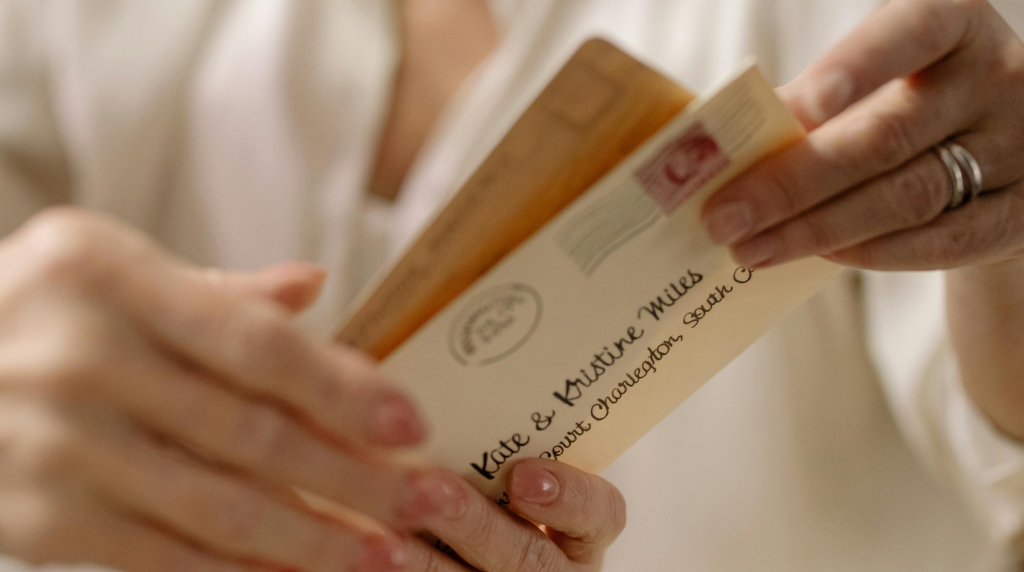
Formal wedding invitation wording in 2026 follows a traditional seven-part structure that includes the host line, request line, couple names, spelled-out date and time, venue, reception details, and RSVP instructions. While etiquette rules remain largely the same, modern couples now simplify logistics by moving RSVPs, directions, and registry details to their wedding website.
This guide covers formal invitation structure, wording examples, etiquette rules, and how to handle modern family situations without overcomplicating your invitation suite.
What should formal wedding invitations include in 2026?
Classic invitations don’t have to be complicated. Following traditional invitation etiquette in 2026 means using a proven structure that’s stood the test of time while adapting to modern needs. Once you know this formula, you can create your invitations without second-guessing every word. Your classic invitation should include seven key elements in a specific order, plus smart timing that makes planning easier for everyone.
The Seven‑Line Anatomy of a Traditional Wedding Invitation
Every classic invitation follows the same structure, according to Emily Post Institute:
- Host line
Example: “Mr. and Mrs. Jonathan Reyes” - Request line
Use:- “request the honor of your presence” for religious ceremonies
- “request the pleasure of your company” for secular weddings
- Couple’s names
List full names for formal invitations. - Date and time
Spell out dates and times completely. - Venue and location
Include venue name, city, and state spelled out fully. - Reception details
Include only if different from ceremony location. - RSVP information
Direct guests to your wedding website for RSVPs and details.
Formal vs Modern Wedding Invitation Wording
| Element | Traditional Formal | Modern Formal |
| Host Line | Parents listed formally | “Together with their families” |
| RSVP Method | Mailed RSVP card | Wedding website |
| Date Format | Fully spelled out | Partially abbreviated accepted |
| Registry Mention | Never included | Wedding website only |
| Tone | Traditional | Simplified but polished |

Write Everything Out for Maximum Polish
Traditional formal invitations should:
- spell out dates completely
- spell out times completely
- avoid abbreviated states
- avoid numerals whenever possible
- spell out street names
The 30/54/56 Rule for Stress-Free Planning
Order 30 extra invitations beyond your guest count to account for keepsakes, mistakes, and last-minute additions. Set your RSVP deadline 54 days before your wedding date, giving you time to finalize catering counts and seating charts without rushing. Keep your wedding website URL under 56 characters so guests can easily type it without errors. These simple guidelines, recommended in comprehensive invitation planning guides, eliminate guesswork and keep your timeline manageable while maintaining the polished feel your celebration deserves.
How To Address Formal Wedding Invitations For Different Family Situations
Formal invitations require precise host line etiquette, especially when family structures don’t fit traditional templates. These guidelines ensure your wording honors everyone appropriately while maintaining classic formality.
- Divorced or remarried parents place each parent on separate lines—never connect them with “and”—and include stepparents if they’re contributing hosts.
- Same-sex or blended families use parallel courtesy titles (Ms., Mr., Mx., Dr.) and maintain consistent structure regardless of gender combinations.
- Deceased parents belong on a separate remembrance card or ceremony program rather than the main invitation host line.
- Multiple families hosting together list both sets of parents as “Mr. and Mrs. Smith and Mr. and Mrs. Jones request the honor” when everyone contributes equally.
- Couple hosting themselves use “Together with their families” followed by both your names to acknowledge parents without listing them as main hosts.
Getting the host line right sets the tone for your entire invitation. According to Emily Post, clear communication about family dynamics helps everyone feel comfortable and respected. Once you have your family situation sorted, you can focus on crafting the perfect invitation wording and setting up your wedding website for RSVPs and details.
What are examples of formal wedding invitation wording in 2026?
Frequently Asked Questions
You want your formal invitations to sound perfect without overthinking every word. These answers give you clarity on modern etiquette so you can create beautiful, proper invitations with confidence.
What is the correct formal wedding invitation wording in 2026?
Use this simple structure: host line, request line, couple names, spelled-out date and time, venue with city and state, reception details, and your wedding website. Write out numbers completely like “Saturday, the Tenth of October.” Choose “honor of your presence” for religious ceremonies or “pleasure of your company” for secular celebrations.
How do you include a dress code on a formal invitation?
Place dress code information on a details card or at the bottom corner of your main invitation. Keep it simple with phrases like “Black Tie,” “Cocktail Attire,” or “Garden Party Attire.” For wedding invite inclusions like dress codes, your wedding website works perfectly for longer explanations.
How do you address formal invitations for divorced, remarried, or same-sex parents?
List divorced parents on separate lines without connecting them with “and.” Include stepparents on the same line if they’re hosting or you want to honor them. For detailed addressing rules covering every family situation, maintain parallel structure and use appropriate courtesy titles for all parents.
Where do RSVP details and your Honeyfund go on a formal invite?
Keep your main invitation classic by placing RSVP instructions and registry information on your wedding website. Add “Please RSVP at .com” to the bottom of your invitation. Your wedding website streamlines guest management while hosting your Honeyfund details gracefully, never on the printed invitation itself.
When should invitations be mailed and what’s a smart RSVP deadline?
Mail formal invitations 6-8 weeks before your wedding date. Set your RSVP deadline 3-4 weeks before the wedding to give yourself time for final headcounts and seating arrangements. This timeline gives guests enough notice while keeping your planning on track.
How can couples simplify formal wedding invitation planning?
Many couples now pair formal printed invitations with a wedding website to simplify RSVP collection, guest communication, and registry organization without compromising etiquette.
Keeping logistical details online allows the printed invitation to stay clean, traditional, and easier for guests to navigate.
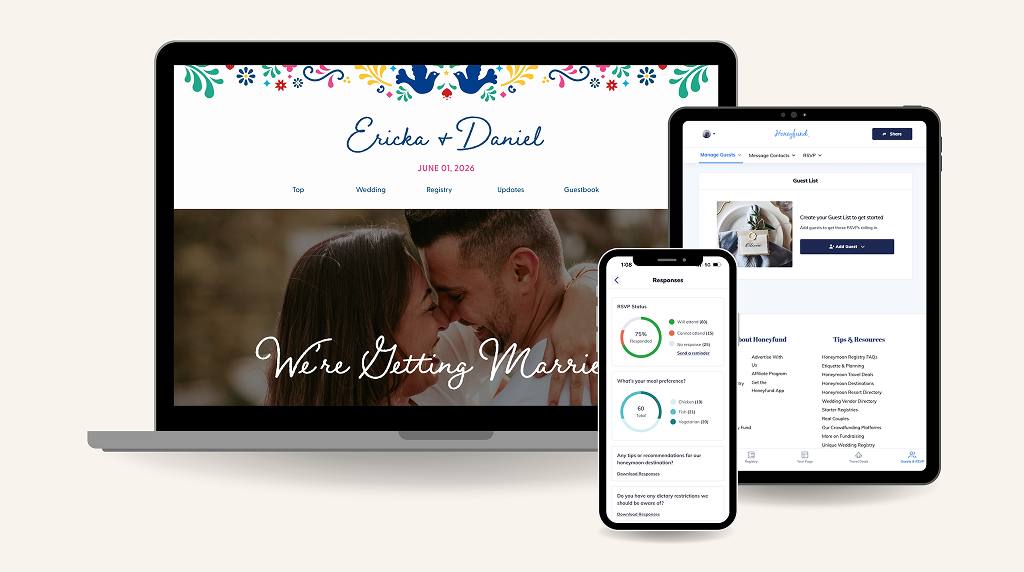
Honeyfund offers a truly fee-free all-in-one wedding website to help you handle RSVPs, details, and cash gifting in one beautiful, guest-friendly page.
Make your dream honeymoon a reality.
Sign up for Honeyfund today and start receiving cash gifts for your wedding and honeymoon.
Start Your Registry